• Skip to main content
  • Skip to secondary menu
  • Skip to primary sidebar

Gaynor Marshall | Sewing and Design

Designing Calm, One Stitch at a Time

  • Home
  • Store
  • About
    • Copyright
    • Disclosure Policy
  • Blog
    • The Cottagecore Aesthetic: Understanding What it is and How to Use it
    • Crafting for Wellness
      • Mindful Crafting: Unlock Creativity and Transform Wellbeing
    • Discover the Inventor of the Sewing Machine: A Fascinating History
    • Sewing
      • Spring Sewing Delights: Fresh Projects to Celebrate the Season
      • Sewing Essentials: Setup & Success
        • How to Set Up an Inspiring Sewing Workspace at Home
        • Sewing Tools: My Essential Top Ten
        • Stitch Library – Ultimate Guide
        • Successful Sewing: My 5 Secrets
        • Thread Basics: The Ultimate Beginner’s Guide to Sewing and Embroidery
    • Tutorials
      • Buttons: Make Your Own
      • Creative Ways to Use Machine Embroidery for Stunning Projects
      • Drawstring Bags: Make Your Own
      • Creative Embroidery Templates: Think Outside the Box for Unique Designs
      • Mini Bunting Make Your Own
      • Take Your Sewing to the Next Level
      • Zips
        • Zips, Part 1: Invisible Zip
        • Zips, Part 2: Semi-concealed Zip
        • Zips, Part 3: Concealed Zip
        • Zips, Part 4: Exposed Zip
  • Get In Touch
    • Cookie Policy
    • Privacy Policy
    • Terms & Conditions
Home » accessories

accessories

Creative Ways to Use Machine Embroidery for Stunning Projects

November 5, 2017 By Gaynor Marshall

pink_hoop_art_4

Design your own fabric using decorative machine embroidery!

I’m sure you’ll agree, beautiful fabric is one of lifes’ necessities…erm…ok…luxuries; the colour, the texture, the feelings it can evoke, the endless creative possibilities. You’ll also be aware of how expensive good quality fabric can be. I’m not trying to talk myself out of my surface design job, but I want to share a quick and easy way to create gorgeous, unique fabric using only plain fabric and thread.

Decorative Machine Embroidery.

Your sewing machine is a fabulous tool. A very, under-used tool. Most of the time, the only stitch we use is the straight stitch; much needed and very necessary when sewing seams, but not the only one available.

Even if you have an entry level sewing machine, it will have a good handful of utility and decorative machine embroidery stitches. Have a look. If you create a stitch library you will be able to see at a glance the array of stitches available to you.

I have designed a number of projects suitable for using any of the stitches you have on your machine. Use them to create home decor items, either for yourself or to give to a loved one or friend.

 Projects.

1. Pincushion

The first project I want to share is a pincushion. Very simple to put together but very stylish and no one anywhere will have one the same style.

turquoise_pin_cushion_1

  • I wanted to create a 6″ (15cm) finished pincusion. I cut 2 squares of main fabric and two squares of lining measuring 6.5″ x 6.5″ ( 16cm x 16cm approx.). You don’t have to use lining fabric you could use stabiliser, thin wadding or anything you have to hand for the inside.

fabric_pieces

  • Using two contrasting colours makes a bigger impact.
  • For the turquoise side I used a bright pink thread and for the green side I used a turquoise thread. I find the best thing to do is to draw a straight line with an air erasable pen so that your first row of stitches is straight. It doesn’t matter whether you start at the edge of your fabric or the centre, I prefer to start in the centre and then space the rows evenly either side.

stitches_on_machine

  • You may choose to sew a random selection of decorative embroidery stitches, or you could mirror them to create a further interesting design feature.
  • Once both your fabric pieces are complete, place them right sides together and sew them together using a straight stitch, remembering to leave a small gap for turning.

decorative_stitches_right_sides_together

turn_out

neaten_seams

  • When you have turned the pincushion out and you are happy with the corners, stuff it firmly with toy or craft stuffing. The trick when stuffing anything is to use small pieces until it is firm and evenly filled.
  • Hand sew the gap using a ladder stitch.

stuff_pin_cushion

embroidered_turquoise_pincushion

  • I also rotated the fabric pieces, so that on one side the stitches ran top to bottom and on the reverse they are side to side. Another design feature for a totally bespoke pincushion.

2. Scissor Keeper

The instructions for making scissor keepers is almost identical to those for a pincushion. The only difference, apart from size, is you need to add a piece of ribbon or cord before you stitch the two pieces together.

For reference my scissor keepers measure 2″ x 2″ and 3″ x 2.5″ finished sizes (5cm x 5cm & 7.5cm x 6cm approx). Add 1/4″ (1cm) for the seam allowances.
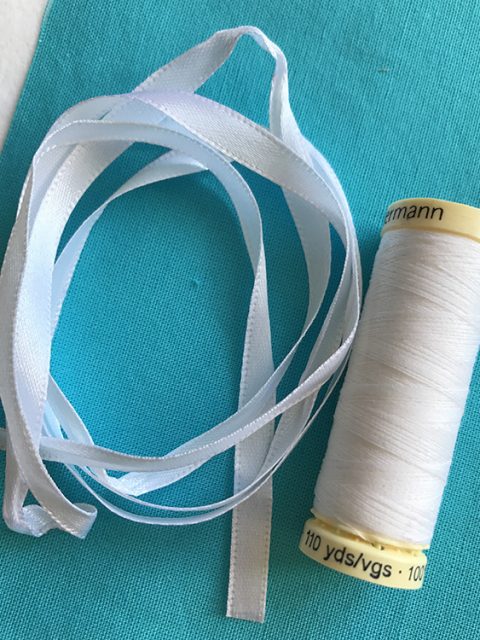
materials_for_scissor_keeper

scissor_keeper_adding_ribbon

  • Carefully tack / baste the ribbon in place before stitching the outer pieces together.

stuff_scissor_keeper

These handy little notions can be made in a variety of sizes for different scissors and can even be used as keyrings.

turquoise_scissor_keeper

scissor_keepers

pink_scissor_keeper

3. Hoop Art.

Use fabric in an embroidery hoop as a modern style of wall art.

These clever little inventions lend themselves perfectly to home decor. Arrange them in groups of varying sizes to add interest to a plain wall.

  • To crate your own hoop art, choose the hoop size you wish to use and stitch your fabric. Make sure the piece of fabric you use is big enough to fit inside the hoop.
  • Trim the fabric piece by using the inner hoop as a template and fix onto the frame.

pink_hoop_art

Display proudly on your wall!

4. Wall Art.

Another idea is to stitch a panel of fabric using decorative machine embroidery stitches and display in a box frame. I created a simple design by using one stitch in the centre of the panel and then I mirrored the outer stitches to form a balanced design.

embroidery_black_frame

embroidery_black_frame_1

embroidery_white_frame_1

Use more than one colour and see the different effects you can achieve. A rainbow of colours would look stunning.

I hope you enjoy creating your own fabric using the decorative machine stitches on your sewing machine. Feel free to share photos of your makes using #gaynormdesigns over on Instagram, I’d love to see them.

Until next time…

Gaynor xx

Ultimate Stitch Library: Your Go-To Guide for Every Stitch

September 24, 2017 By Gaynor Marshall

stitch_sample

A stitch library is something every sewist should make.

“I finally bought the sewing machine, now what?”

I bet this question resonates with lots of people who’ve bought a sewing machine. You’ve dreamt of the day you can fill your world with things you’ve sewn yourself. The entire new wardrobe of clothes you’ll be able to make, the curtains and cushions…lots and lots of cushions.

You’ve spent weeks, months even years choosing just the right machine; you’ve watched all the shopping channels until you know as much about the technical aspect of all their machines as the presenters.

However, now you actually have the longed for sewing machine, what do you do? Where do you start?

Rainbow_threads_and_fabric

This scenario reminds me of the time, shortly after hubby and I got married; you know back when the world was still in black and white (as my boys thought when they were little!), when we bought our first microwave. I thought it was really exciting, hubby not so much, his mum already had one.

Anyway, we brought this cool, modern gadget home. This was going to save so much time, the gas cooker will just gather dust now, surely. Well, there it sat on the worktop and we stood and admired it, we read the manual, we read the suggested recipes. What though, should we actually cook first? No idea. We re-read the recipe suggestions. No. Nothing was jumping out.

Eventually, we heated something up, beans, I think. The point was, we were at a bit of a loss as to what we should do first. We, had been so caught up in having a microwave that we didn’t really plan beyond buying it, and that’s how many people feel when they open their first sewing machine at home.

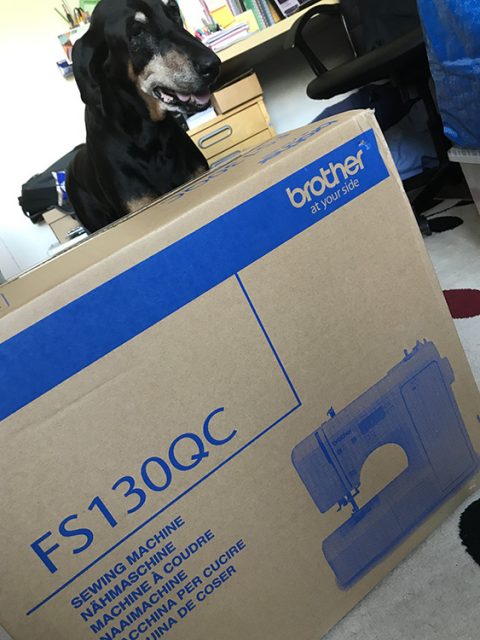
Juno_and_my_new_machine

Well, the first thing to do is take it out of the box. It’s okay to sit and admire it for a while; you can make a cuppa, take out the manual and read it.

Familiarise yourself with the basics of the set-up and following the instructions in the manual, thread your machine. Practise a few rows of straight stitching on a scrap piece of fabric to check everything is working correctly.

At this point, unless you have a definite plan of action it would be so easy to put everything away. You know how it all works, you’ve had a little sew. Well, I suggest you do this instead…

You will have noticed that in the manual and probably on the machine itself there is a library of stitches. This is a very handy reference guide for the number and type of stitches that your particular sewing machine can produce. However, as these are printed images, they can sometimes appear slightly different when you stitch them. One great way to see what the stitches on your machine look like in real life is to stitch them; create your own stitch library.

stitch_sample

It’s much easier to see all of the stitches this way, you can alter the stitch length and width to compare to the default stitch and you’ll have this for future reference.

Cut out two pieces of fabric; I used my long ruler as a measure and I chose the full width of a piece of linen and a piece of spare lining fabric.It’s much easier to see all of the stitches this way, you can alter the stitch length and width to compare to the default stitch and you’ll have this for future reference.

long_ruler_scissors_and_pen

It doesn’t matter if you have a basic machine with a handful of stitches or a top of the range model with hundreds, doing this exercise will enable you to create a very useful chart, get to know your machine and practise your sewing skills, all at the same time.

stitch_library_samples

The main thing to remember is to have fun! Making a stitch library will boost your confidence and when it’s finished, you’ll have something pretty to look at too!

Until next time…

blog_signature

Primary Sidebar

Printable Downloads

Search

Join My Substack

Copyright © 2017-2026 Gaynor Marshall

We are using cookies to give you the best experience on our website.

You can find out more about which cookies we are using or switch them off in .

Gaynor Marshall | Sewing and Design
Powered by  GDPR Cookie Compliance
Privacy Overview

This website uses cookies so that we can provide you with the best user experience possible. Cookie information is stored in your browser and performs functions such as recognising you when you return to our website and helping our team to understand which sections of the website you find most interesting and useful.

Strictly Necessary Cookies

Strictly Necessary Cookie should be enabled at all times so that we can save your preferences for cookie settings.

Cookie Policy

More information about our Cookie Policy