• Skip to main content
  • Skip to secondary menu
  • Skip to primary sidebar

Gaynor Marshall | Sewing and Design

Designing Calm, One Stitch at a Time

  • Home
  • Store
  • About
    • Copyright
    • Disclosure Policy
  • Blog
    • The Cottagecore Aesthetic: Understanding What it is and How to Use it
    • Crafting for Wellness
      • Mindful Crafting: Unlock Creativity and Transform Wellbeing
    • Discover the Inventor of the Sewing Machine: A Fascinating History
    • Sewing
      • Spring Sewing Delights: Fresh Projects to Celebrate the Season
      • Sewing Essentials: Setup & Success
        • How to Set Up an Inspiring Sewing Workspace at Home
        • Sewing Tools: My Essential Top Ten
        • Stitch Library – Ultimate Guide
        • Successful Sewing: My 5 Secrets
        • Thread Basics: The Ultimate Beginner’s Guide to Sewing and Embroidery
    • Tutorials
      • Buttons: Make Your Own
      • Creative Ways to Use Machine Embroidery for Stunning Projects
      • Drawstring Bags: Make Your Own
      • Creative Embroidery Templates: Think Outside the Box for Unique Designs
      • Mini Bunting Make Your Own
      • Take Your Sewing to the Next Level
      • Zips
        • Zips, Part 1: Invisible Zip
        • Zips, Part 2: Semi-concealed Zip
        • Zips, Part 3: Concealed Zip
        • Zips, Part 4: Exposed Zip
  • Get In Touch
    • Cookie Policy
    • Privacy Policy
    • Terms & Conditions
Home » how to

how to

How to Set Up an Inspiring Sewing Workspace at Home

January 15, 2025 By Gaynor Marshall

Whether you’re new to sewing or have decades of experience, having a well-organised, inspiring workspace can make all the difference in your projects. A thoughtfully designed sewing area not only enhances your creativity but also helps you stay productive and stress-free. Here’s how to set up a sewing workspace that works perfectly for you—whether you have a dedicated room or just a small corner.

1. Choose the Right Location

The first step in creating an inspiring sewing workspace is finding the right spot. Ideally, this should be a space with natural light to reduce eye strain and provide a cheerful atmosphere. If natural light isn’t an option, invest in good quality daylight bulbs to mimic bright, clear light.

Consider these factors:

– Noise Level: Choose a space where you can work undisturbed, especially if you’ll be using a sewing machine for long stretches.

– Accessibility: Keep your workspace near outlets for plugging in your sewing machine, iron, and other tools.

– Space for Growth: If possible, pick a location that allows you to expand as your sewing projects and supplies grow.

2. Invest in the Right Furniture

Comfort and functionality are key when choosing furniture for your sewing area. Here are the essentials:

– Sewing Table: A sturdy table is a must. Look for one with enough surface area to accommodate your sewing machine, fabric and tools. Adjustable-height tables are a great option for avoiding back or neck strain.

– Cutting Table: If you have space, a separate cutting table can save you time and effort. Choose a table at waist height to make cutting fabric more comfortable.

– Chair: A comfortable, adjustable chair with good back support is essential. You’ll spend hours seated, so invest in one that keeps you comfortable.

3. Organise Your Supplies

An organised workspace boosts efficiency and keeps your creativity flowing. Here are some ideas to keep your supplies neat:

– Storage Solutions: Use bins, shelves or cabinets to store fabric, thread and tools. Clear storage containers are helpful for easily spotting what you need.

– Pegboards: Install a pegboard above your sewing table to hang scissors, rulers and frequently used tools.

– Thread Organiser: A thread rack keeps your spools visible and prevents tangling. Group threads by colour to make it easier to find what you need.

– Fabric Storage: Fold fabrics neatly and store them in baskets, drawers or shelves. Label storage bins so you can quickly grab the fabric you’re looking for.

4. Create Zones for Efficiency

Divide your workspace into functional zones to streamline your sewing process. For example:

– Cutting Zone: A space with a cutting mat, rotary cutter and rulers.

– Sewing Zone: Your sewing machine, thread and frequently used tools should be within arm’s reach.

– Ironing Zone: Set up an ironing board and iron nearby for pressing seams as you sew.

This setup reduces the amount of back-and-forth movement, saving you time and effort.

5. Personalise Your Space

Make your workspace inspiring by adding personal touches that reflect your style and passion for sewing. Ideas include:

– Wall Art: Hang prints, posters or framed fabric swatches that motivate you.

– Pinboards: Use a pinboard to display project ideas, fabric samples or inspiring photos.

– Plants: Add a small plant or two to bring life and calmness to your workspace.

– Mood Lighting: String lights or a decorative lamp can add a cosy touch.

6. Keep It Clean and Tidy

A clutter-free workspace keeps you focused and productive. At the end of each sewing session:

– Return tools to their designated spots.

– Sweep or vacuum fabric scraps and threads.

– Organise your current projects into labeled bins or trays to avoid losing pieces.

Regular cleaning makes it easier to jump into your next project with a clear mind.

7. Upgrade as You Grow

Your sewing needs may evolve over time, so don’t be afraid to make upgrades:

– Add more storage as your fabric collection grows.

– Invest in a second machine for specialised tasks like embroidery or serging (over-locking).

– Experiment with new tools or gadgets to make sewing more enjoyable.

Conclusion

Setting up an inspiring sewing workspace is all about creating a functional and inviting environment tailored to your needs. Whether it’s a small corner in your living room or a dedicated craft room, the right setup will help you enjoy your sewing journey even more. With a little planning and organisation, your workspace will become your favourite spot to bring your creative visions to life.

What’s your must-have item for your sewing workspace? Share it in the comments below!

Creative Embroidery Templates: Think Outside the Box for Unique Designs

January 14, 2018 By Gaynor Marshall

wildlife_friends_finished_projects

I’m sure that like me, you try to get the most out of your creative purchases. We all like added value especially when we work hard for our money. So, when I designed my embroidery templates I was keen to explore other ways to use them. Of course you can use these creative suggestions for any templates that you may already have.

More than just embroidery templates

Alfie, Ethan and Sophie are such cute little characters, I immediately thought they’d look awesome appliqued onto cushions and of course hoop art.

The images can be used as they are but I decided to enlarge them slightly.

all_three_embroidery_templates

The simple shapes of the embroidery templates lend themselves perfectly to the technique of applique and of course they can be further embellished if you wish.

Ethan Whale: easy cushion

ethan_finished_cushion

  • I traced around Ethan onto some Bondaweb and ironed this onto my chosen fabric. For my little panels I used 8″ squares of cotton fabric. You can use any size for your projects though, it’s entirely up to you.
  • I then cut Ethan out and ironed him in place on the white panel.

ethan_template

  • Using some white thread, I machine stitched around the outside of Ethan close to the edge of the fabric. I used the normal foot on the machine and took my time, taking care around his tail. I did this a couple of times. Don’t worry if you wobble a little with your stitching, no one will see.

ethan_close_up_of_tail

  • I used the same fabric on the reverse of the cushion. Simply stitch the front and back panels together, leaving a gap for turning and then stuff with toy stuffing. Hand stitch the seam closed to finish and enjoy! A simple yet effective little, decorative cushion.

ethan_decorative_cushion

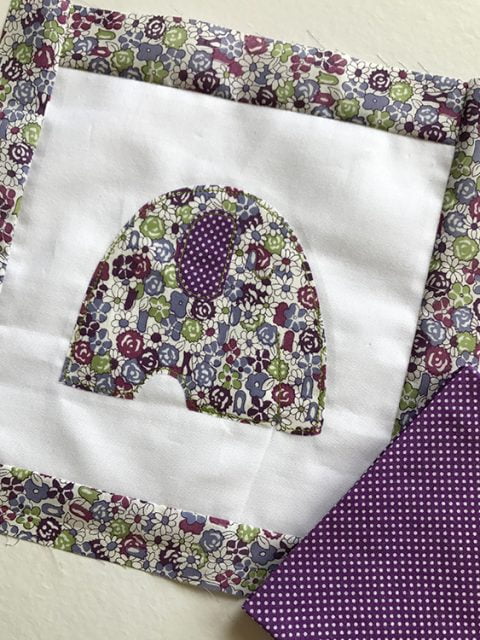
Sophie Elephant: bordered cushion

sophie_finished_cushion

  • As with Ethan, I used Bondaweb to applique Sophie onto the white cotton fabric.

sophie_template

  •  I chose a purple mini polkadot fabric for her ear, and I picked out the green in the fabric to stitch the ear close to the edge of the fabric. I also used this colour to stitch around Sophie.

sophie_close-up_ear

  • To make the border, I chose the same fabric I had used for Sophie, and cut 4 strips that were 1.5″ wide and long enough to border the main panel.

sophie_pinned_border

  • Stitch the border strips on the top and bottom first, and press in place using an iron.
  • Do the same on the remaining two sides and trim away any excess.

sophie_border_attached

  • I chose to use some of the purple mini polkadot fabric for the reverse. Cut to the same size as the front panel and sew together as before.

sophie_finished_cushion

Alfie Giraffe: appliqued hoop art

alfie_hoop_and_thread

This is the simplest project, but I think it’s still as striking and definitely fun.

  • Follow the steps above to applique Alfie onto the cotton panel.

alfie_template

  • This time I used a gorgeous turquoise thread to outline Alfie, using the same method as above.
  • I placed Alfie in a 6″ hoop, and gathered the excess fabric at the back. A quick and easy piece of original art. Bespoke and personal, a unique way to decorate your home.

alfie_close_up_with_thread

Wildlife Friends

wildlife_friends_finished_projects

I hope you like these projects, and if they inspire you to create your own, why not share them on Instagram using #gaynormdesigns, I’d love to see them.

Until next time…

blog_signature

Successful Sewing: My 5 Secrets

October 29, 2017 By Gaynor Marshall

pincushion_in_pins_fabric

The Secrets to Successful Sewing

I have 5 secrets to successful sewing and they will probably surprise you.

Sewing is a skill that we have to learn and not something we are born with.

Sometimes people refuse to learn anything new because they may feel vulnerable, but that’s how we grow. Staying inside our comfort zones is safe but it also means that we never experience anything new.

Read on to discover my 5 secrets to being successful, not just at sewing but anything creative.

1. Remember You Are Awesome.

Surprisingly, being successful at something creative, whether that’s sewing, baking, painting, knitting or something else, isn’t simply about having the latest, most expensive equipment or the largest studio in the most fashionable part of town. It’s much more fundamental than that.

It’s about YOU!

You are the one who has to put in the time and effort into your chosen field of study and practise. Again and again.

2. Practise Makes Perfect.

You don’t have to make complete projects every time you sew, just allow yourself time to play and experiment.

Make use of that basket of scraps, experiment with the stitches on your machine, treat yourself to a few new spools of thread. Check out my beginners guide to thread here.

embroidered_turquoise_pincushion

jewel_coloured_threads

I’ve seen so many people panic about creating something because they’ve never attempted a particular project before. However, if you are used to handling different fabrics and sewing notions, it becomes much easier to learn a new technique.

Successful sewing really is about building your confidence.

I’m not saying that by playing we’ll all suddenly become experts in everything, far from it. What I am saying is, if you familiarise yourself with the various aspects of your craft, you broaden your experience and expand your skillset.

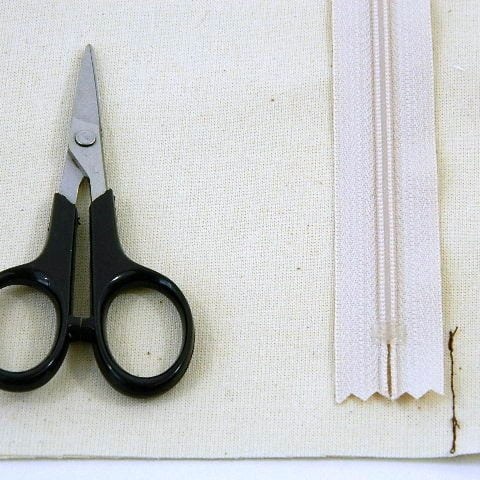
For example, if you practise inserting zips, the next time you have to insert a zip into a cushion or a piece of clothing, you will at least have an understanding of the process. You will be familiar with it and it won’t be so scary. Use small scraps of fabric and keep them for future reference.

zip_sample

3. Handmade Not Homemade.

My mission is to encourage people to take up sewing and embrace all that that entails. To have a go, have fun and learn new skills. Join a sewing group in your area and make new friends.

Everyone makes mistakes, it’s part of the learning process. Your unpicker will become one of your best friends, believe me, I speak from experience! But, on the other hand, wobbly seams and uneven hems are not the end of the world and the next time you tackle them they will be much better.

However, I am not about cutting corners and making do.

It saddens me when I hear people say things like “life’s too short to hand close a seam”. Really? You would rather finish a beautiful bag by machine stitching the lining closed because it may take a couple of minutes to hand sew it with an invisible ladder stitch?

simple_ladder_stitch

In my opinion, if you are going to learn how to do something, you should at least learn how to do the basics properly.

4. Learning Resources.

I mentioned joining a local sewing group, but there are lots of options for you to consider when starting your successful sewing journey.

There are plenty of free videos and tutorials around, but be selective. Not all of the contributors are qualified or experienced, so my advice is to take recommendations or at the very least follow someone reputable.

Workshops are a wonderful place to start and can be less expensive and less time consuming than committing to a course of lessons. Being with a tutor is sometimes a better way to learn new techniques, especially if you are a kinaesthetic or hands on type of learner.

Sewing groups on social media can be a good source of information and support, again make sure they can offer what you need.

Last but not least, invest in a book or two.

5. Have Fun.

The main thing to remember on your journey to successful sewing, is to have fun.

Don’t be afraid of making mistakes, we all make them. The trick is to learn from them so that we don’t knowingly repeat them.

Enjoy the process and be proud of the things you make.

If you’d like to share photos of your creations, you can share them over on Instagram using #gaynormdesigns. I’d love to see them.

Until next time…

Gaynor xx

Drawstring Bags: Make Your Own

October 3, 2017 By Gaynor Marshall

finished_drawstring_bag

I don’t know about you, but I love drawstring bags. They are so handy. They can be made in all sorts of different sizes and used for so many things; from toiletries to toys and everything in between. Use them as party bags for the kiddos or as a gift bag for a friend.

Use Your Stash

The bag I have designed is simple but depending on your choice of fabric it could look very elegant indeed. It could be embellished with buttons or embroidery stitches. In fact, the only limit is your imagination.

You don’t need any particular fabric either, so raid your stash and let’s start making.

The first thing is to decide how big you would like your bag to be. What are you going to use it for?

I decided to cut my fabric 10″ x 8″ (25cm x 20cm) approx. This gives the bag approx dimensions of 9″ x 7″ (23cm x 18cm). 

I used the edge of the foot as a seam guide.

Materials to Make Your Drawstring Bags

You will need:

  • main fabric
  • lining fabric
  • matching thread
  • ribbon or cord approx 5 times the finished width of your bag
  • sewing machine (optional) as these bags can be stitched by hand if preferred

drawstring_bag_supplies

Method:

  • Once you know the size you would like your bag to be, cut 2 pieces of the main fabric and 2 pieces of the lining fabric. I cut mine 10″ x 8″. You may like to press the fabric at this stage.

fabric_for_drawstring_bag

  • Pin the main fabric to the lining pieces, right sides together.

pin_fabric

pin_fabric_right-sides_together

  • Stitch along the top edge of the fabric pieces carefully.

stitch_along_the_top_edge_of_the_fabric

  • Press the seam allowances open.
  • Take both pieces of fabric and place these right sides together, lining to lining, main to main, carefully matching the seams and pin in place.

right_sides_together

  • Before we can stitch the pieces together, we need to mark the openings for turning the bag the right way out and also where we want our  ribbon/cord to be.
  • Leave a gap of 3-4″ in the seam of the lining so that the bag can be turned inside out easily.

leave_a_gap_in_the_lining

  • Mark points on both side seams approx 1.5″ (4 cm) down from the top line of stitching and then 1″ (2.5 cm) below that. This will be where the ribbon or cord will be threaded.

mark_points_for_the_ribbon_or_cord

marks_for_ribbon

  • Stitch all the way around the edge of the fabric, remembering to leave gaps where indicated. Reinforce the stitches at the sides of the gaps with a couple or reverse stitches to strengthen them.
  • Before turning your bag out, trim the corners to allow them to sit neatly.

trim_the_corners

  • Carefully turn the bag right sides out. Make sure you get into the corners for a neat finish.
  • Now handstitch the gap in the lining with a simple ladder stitch.

simple_ladder_stitch

  • Ease the lining into the main fabric and press gently making sure all of the seams are neat.

ease_the_lining_into_the_main_body_of_the_bag

  • After you have pressed the bag, and you are happy with the lay of the lining, top stitch close to the top edge.

top_stitching

top_stitching_from_inside

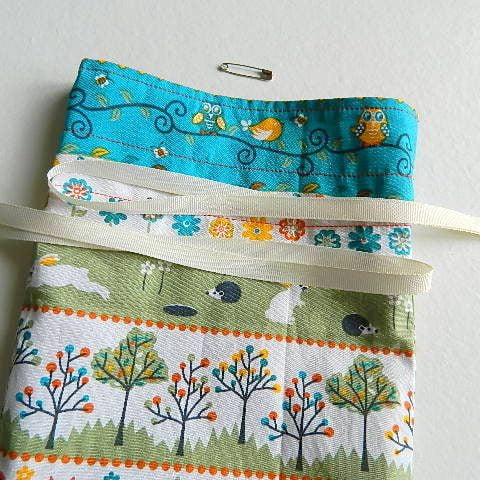
  •  After making sure the side seams are lying flat inside, stitch two lines all the way around the bag from the points marked at the seams. It may be easier to draw lines across the fabric for this, but make sure you can remove them easily afterwards.

stitch_two_rows_for_threading

  • Take the ribbon / cord and cut two pieces as shown below.

cut_two_pieces_of_ribbon

  • Using a safety pin, thread one piece of ribbon from one side, thread all the way around and bring it back out at the same side. Knot. Repeat from the other side with the remaining ribbon.

use_a_safety_pin_to_thread_the_ribbon

knot_ribbon

  • Press well…et voila! You have a gorgeous, bespoke, drawstring bag! To close, pull on both ribbons/cords at the same time.

drawstring_bag

gathered_drawstring_bag

close_up_of_drawstring_bag

These little drawstring bags are so easy to make, you’ll be making them for everyone! Have fun and if you take any photos I’d love to see them, just use #gmdesigns on Twitter and Instagram and I’ll take a look.

Until next time…

Gaynor xx

Thread Basics: The Ultimate Beginner’s Guide to Sewing and Embroidery

September 19, 2017 By Gaynor Marshall

coloured_thread_bright_fabric

Not all thread is created equal. That may surprise some people, but like most things in life there are good ones and not so good ones! This guide is to help you differentiate between the various types used for machine sewing, quilting and patchwork.

My top tip is to always buy the best you can afford. Buying cheaply is false economy. Chances are you will not be happy with the result; the thread may break in use or fluff so much it affects the smooth running of your sewing machine, especially if you are working on a large project.

Rainbow_threads_and_fabric

Projects

Generally speaking, you should try to match your thread type to the project you are working on. So, for example, if you are making a pair of curtains an all purpose polyester will be fine, if you are working on an heirloom quilt you may want to use a quilting weight 100% cotton. As with everything though, personal preference will be the determining factor. It really is up to you. Years ago, it was considered important to match the fibre of your project with the fibre of the thread, however, with all the improvements in production techniques it isn’t so important. Good quality polyester thread is always handy to have in your cupboard.

Colour

Gutermann_polyester_thread

With all the advances in technology, the choice of colour is almost limitless. Trying to choose can sometimes make you feel like a kid in a candy store…there can seem to be too much choice.

When you are building your range of thread, start with the basics. Neutral tans, grey, black, white and creams, together with a few key colours will be suitable for most projects. After that, you can buy according to the projects you are working on.

Which brand?

As well as types of thread, there are lots of manufacturers. Everyone has their personal favourites. If you are just starting out on your sewing journey, a good place to start is your local fabric or haberdashery shop. They will be able to offer some initial guidance and you’ll soon discover your favourites and be able to build up your supply.

Some things to consider:

  • Darker shades blend in more, lighter shades stand out.
  • Don’t use old thread without testing it first. It may break or even disintegrate.
  • The higher the number on quilting thread the finer it is so; #60 is finer than #40. A good place to start is #50.
  • If there is a letter on the thread, A is fine and D is heavy.
  • Remember to check you have the correct needle when you use speciality threads.
  • For stretchy fabrics use a polyester thread because it has a little give in it.
  • Hand-sewing thread should not be used in your machine.
  • In most cases, it is perfectly fine to use the same thread in the bobbin. However, for machine embroidery, special bobbin thread is available, it is slightly finer and available in black or white.

Types of thread

Cotton  – has very little “give”. Suitable for basic machine or hand sewing projects. 

Polyester – is considered to be an all-purpose thread. Suitable for both machine and hand-sewn projects. It has a little “give” and is therefore useful for stretchy fabrics.

Heavy duty  – this is also a polyester thread and is suitable for upholstery, canvas and other heayweight fabrics.

Hand quilting – 100% mercerized cotton. Strong and silky.

Machine quilting – 100% cotton. Suitable for machine sewing especially good for long arm machine quilting. Not suitable for constructing garments.

Silk – very fine. Often used for embroidery. This is a good choice for basting / tacking fabrics together.

Metallic – Often used in machine embroidery but should not be used in the bobbin. A good choice for top stitching.

Invisible / Monofilament – can be either nylon or polyester. Nylon can become brittle and discolour over time and is not heat resistant. Use when you do not want the stitches to be visible.

I hope you find this guide useful wherever you are on your sewing journey.

Until next time…

Gaynor xx

Next Page »

Primary Sidebar

Printable Downloads

Search

Join My Substack

Copyright © 2017-2026 Gaynor Marshall

We are using cookies to give you the best experience on our website.

You can find out more about which cookies we are using or switch them off in .

Gaynor Marshall | Sewing and Design
Powered by  GDPR Cookie Compliance
Privacy Overview

This website uses cookies so that we can provide you with the best user experience possible. Cookie information is stored in your browser and performs functions such as recognising you when you return to our website and helping our team to understand which sections of the website you find most interesting and useful.

Strictly Necessary Cookies

Strictly Necessary Cookie should be enabled at all times so that we can save your preferences for cookie settings.

Cookie Policy

More information about our Cookie Policy