• Skip to main content
  • Skip to secondary menu
  • Skip to primary sidebar

Gaynor Marshall | Sewing and Design

Designing Calm, One Stitch at a Time

  • Home
  • Store
  • About
    • Copyright
    • Disclosure Policy
  • Blog
    • The Cottagecore Aesthetic: Understanding What it is and How to Use it
    • Crafting for Wellness
      • Mindful Crafting: Unlock Creativity and Transform Wellbeing
    • Discover the Inventor of the Sewing Machine: A Fascinating History
    • Sewing
      • Spring Sewing Delights: Fresh Projects to Celebrate the Season
      • Sewing Essentials: Setup & Success
        • How to Set Up an Inspiring Sewing Workspace at Home
        • Sewing Tools: My Essential Top Ten
        • Stitch Library – Ultimate Guide
        • Successful Sewing: My 5 Secrets
        • Thread Basics: The Ultimate Beginner’s Guide to Sewing and Embroidery
    • Tutorials
      • Buttons: Make Your Own
      • Creative Ways to Use Machine Embroidery for Stunning Projects
      • Drawstring Bags: Make Your Own
      • Creative Embroidery Templates: Think Outside the Box for Unique Designs
      • Mini Bunting Make Your Own
      • Take Your Sewing to the Next Level
      • Zips
        • Zips, Part 1: Invisible Zip
        • Zips, Part 2: Semi-concealed Zip
        • Zips, Part 3: Concealed Zip
        • Zips, Part 4: Exposed Zip
  • Get In Touch
    • Cookie Policy
    • Privacy Policy
    • Terms & Conditions
Home » Zips, Part 2: Semi-concealed Zip

Zips, Part 2: Semi-concealed Zip

January 28, 2018 By Gaynor Marshall

In the second part of my series about inserting zips into your projects, we’ll be looking at how to use a semi-concealed zip.

What are semi-concealed zips?

A semi-concealed zip refers to the way the zip is inserted into the project. With this method the teeth of the zip will not be visible from the right side of the fabric although the stitching will.

semi_concealed_zip

You may decide to make more of a feature of the stitching by using a contrasting thread.

There are many uses for this type of insertion, some of which include:

  • making more of a feature of the zip opening
  • making cushions
  • bag making
  • dress making

A standard zipper foot should be used if you are sewing with a machine.

Did you know?

In 1851, Elias Howe received a patent for an “Automatic, Continuous Clothing Closure”. However, he failed to market the design and in 1893, Mr Whitcomb L. Judson patented and brought to market his “Clasp Locker”. Being the first to market, gave Mr Judson credit for inventing what was later termed the “zipper”.

Materials

  • fabric
  • thread
  • zip
  • zipper foot

Method:

  • Cut your fabric to the required size and place right sides together.
  • Position the zip on your fabric and mark the point at the base of the zip.

semi_concealed_zip_position

  • Machine stitch the seam to the base of the zip position.
  • Tack the rest of the seam closed.

tack_seam_in_place

  • Press the seam open.
  • Place the fabric wrong side up and lay the zip face down over the seam and tack in place.
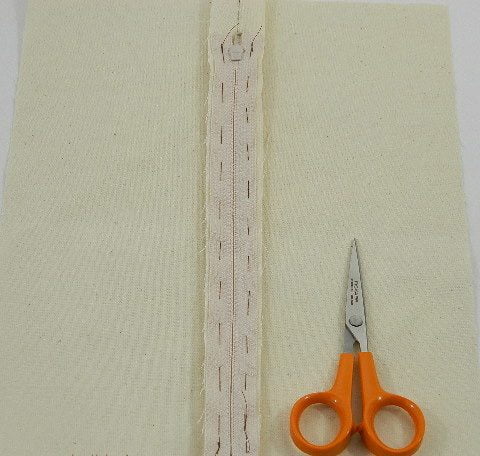
tack_zip_in_place

  • On the right side, sew carefully down each side of the zip, taking care not to expose the teeth.

top_stitch_the_zip_in_place

  • Remove tacking stitches. 

stitch_line

  • Remove tacking stitches.

If you missed Part 1 you can find it here.

I hope you are finding this series useful. If you have any questions please pop them in the comments below or you can email me here.

Next time: concealed zips.

Until then…happy sewing!

blog_signature

facebookShare on Facebook
TwitterTweet
FollowFollow us
PinterestSave

Filed Under: Sewing, Sewing Tips for Trouble Free Sewing, Tutorials, Zips Tagged With: concealed zip, create, exposed zip, home decor, how to insert a zip, invisible zip, semi-concealed zip, sewing, sewing blog, sewing tutorial, soft furnishings, zips

Reader Interactions

Comments

  1. erin says

    February 7, 2018 at 2:59 am

    This sewing technique of zipper insertion is actually called ” centered zipper ” and is also called that in the industry.

    • Gaynor Marshall says

      February 7, 2018 at 8:05 am

      Thank you for taking the time to comment.
      In the UK we refer to this type of zip insertion as semi-concealed.

Primary Sidebar

Printable Downloads

Search

Join My Substack

Copyright © 2017-2026 Gaynor Marshall

We are using cookies to give you the best experience on our website.

You can find out more about which cookies we are using or switch them off in .

Gaynor Marshall | Sewing and Design
Powered by  GDPR Cookie Compliance
Privacy Overview

This website uses cookies so that we can provide you with the best user experience possible. Cookie information is stored in your browser and performs functions such as recognising you when you return to our website and helping our team to understand which sections of the website you find most interesting and useful.

Strictly Necessary Cookies

Strictly Necessary Cookie should be enabled at all times so that we can save your preferences for cookie settings.

Cookie Policy

More information about our Cookie Policy